Showing posts with label YouTube. Show all posts

Wednesday, 19 April 2017

Streamers flock to YouTube Live, but the money (and crowd) is still at Twitch


YouTube Live is making impressive strides in catching up to incumbent Twitch, but it has a long way to go yet. On the bright side, it doesn’t look like they’ll run out of road: Streaming looks to be a fairly sustainable business, suggest stats from Streamlabs’ latest report.
According to data gleaned through Streamlabs’ streaming assistant app, YouTube Live has outpaced Twitch in growth over the last six months. That’s to be expected with a newish service offered by a powerful competitor, but it’s also not uncommon to see challengers like this fail to gain serious traction at all.
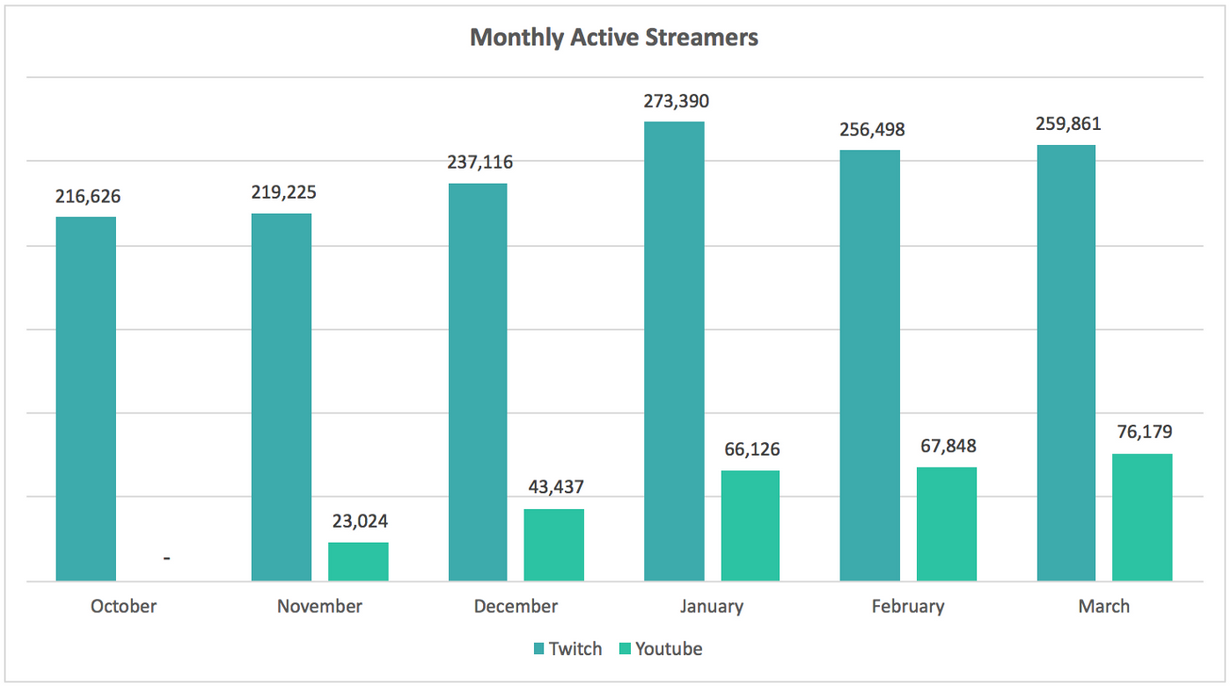
Twitch these days has somewhere north of 250,000 monthly active streamers, and that’s growing in fits and starts; 5,000 this month, 15,000 the next. YouTube added 23,000 its first month, and has grown to around 75,000 (again, monthly actives). That’s healthy growth and its momentum seems far from spent.
That said, Twitch still generated 96 percent of the tip revenue that Streamlabs (which is used by huge numbers of streamers) directly observed.
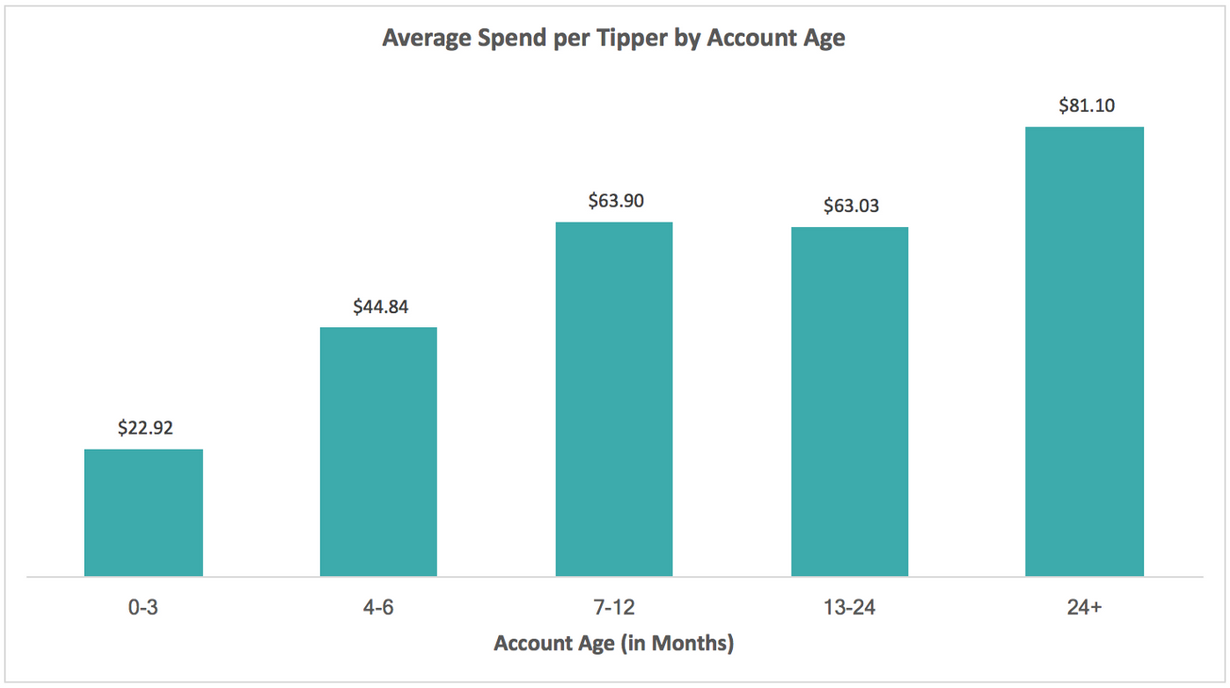
One pleasantly surprising statistic newly reported is that longtime stream viewers tip considerably more than new ones. Two-year-old accounts tipped more than $80 total on average, while brand new accounts tipped around $23. The numbers smoothly increase between those extremes, implying this is something people are adopting as a regular hobby, just like anything else, and spending money accordingly.
That’s supporting the streamers themselves, who are increasingly likely to pull real income from their channel. The number of non-sponsored streamers is increasing, as well.
I chatted briefly with Ali Moiz, CEO of Streamlabs, about the state of the industry. In particular, I was afraid that with Twitch no longer growing like a weed (merely like a regular plant), that could put some dampers on the wild speculation about the future of the streaming business.
Moiz acknowledged that Twitch’s growth had slowed, but pointed out that was more due to healthy competition.
“For a new streamer starting today there’s a much greater choice than there was a few years ago. Back then basically anyone interested in live streaming had to go to Twitch,” he said. Now you have YouTube, Facebook, Instagram and half a dozen others.”
But, I asked, more options doesn’t mean more streamers or more viewers necessarily. Where’s the next five years of growth going to come from?
“In my view the biggest chunk of growth is going to come from outside of gaming. Mobile broadcasting is just getting started,” Moiz said. “Travel, fashion, beauty, concerts, food (that’s big in Korea). Gaming is going to have nice incremental growth, but it’s not going to double or triple like it has in the past.”
You can read the full report (they come out quarterly now, since the first one in January) over at Streamlabs’ Medium post.

Wednesday, 9 October 2013

BBC Playlister web client launches later today in beta


BBC Playlister web client launches later today in beta
Well, that was quick. Having announced its new Playlister service yesterday, the BBC's now said it's launching later today. The beta web client won't just work nicely on PCs, it'll also be optimized for mobile browsers, and instead of a dedicated app for the service, Playlister will be integrated into the iPlayer Radio app "over the coming months." Using the web platform, you'll able to add music to personal playlists from any of the BBC's radio stations, as well as tracks that've featured on TV shows aired on any of the Beeb's channels. As we heard yesterday, those playlists can then be exported to YouTube, Spotify or Deezer for listening. Having seen a brief demo, adding, managing and exporting is all pretty simple. You may not find all the tracks you've added on every service you export to, but it clearly shows what's missing -- you'll shortly be able to play around with it yourself, of course. Soon, you'll also be able to follow your favorite BBC radio DJ's and see what they're adding to their own Playlister mixtapes. This is just the start, apparently, as the BBC says many other features will be added in the future
engadget.com
Get more Technology News in Hindi visit at jagran.com

Wednesday, 25 September 2013

YouTube teams up with Google+ to turn comments into conversations

YouTube teams up with Google to turn comments into conversations
Comments on the internet: often a haven for trolls and axe-grinders, but comment threads also give rise to some insightful and entertaining commentary. In an effort to encourage the latter and to provide users with an improved experience, YouTube's rolling out a new commenting system that integrates deeply with Google+. What does that mean, exactly? Much like that other social network's News Feed, comments in YouTube will be based on relevance, not how recently they were posted. So, comments from people you know, celebrities and video creators, plus positively rated comments will percolate to the top of comment threads according to Big G's ranking algorithms. Additionally, replies will be nested beneath original comments to better enable conversations. Like Facebook, should you find the idea of automated comment curation unsettling, you can always switch back to the old way of having the most recent comments show up first.

The integration with Google+ also broadens your commenting boundaries; post a comment on YouTube, then share that video on on G+ and comments and replies made on either site will show up in both places. You can also control who gets to read comments you make by choosing which circles will see them, so you can even have private conversations. As for content owners, the system borrows features from many other commenting platforms. To deal with comments at scale, channel admins can build user whitelists and blacklisted words and phrases to make moderation easy. YouTube Product Manager Nundu Janakiram tells us that the comments system has been in the works for over a year, and that these features are only the beginning. His team plans to provide even better tools for users and content creators to let them filter out the noise and increase the quality of comments. Initially, folks will be able to test out the new comments in the discussion tab on any YouTube channel's home page, after which it'll roll out to individual videos in the coming months -- and we'd be shocked if these G+ enabled comments don't make their way into many other Google properties eventually, too.

Source: News in Hindi